
The Rule of Thumb
If a garage door won't budge on a cold morning in Lake Hamilton, the cause almost never is ice itself — it's the moisture from the night before that swelled, rusted, or gummed up a part while the temperature dropped. Central Florida doesn't get hard freezes often, but a cool front rolling in after a humid day creates the same effect on a smaller scale: condensation forms on metal tracks and hardware overnight, and by sunrise that moisture has thickened grease, tightened a swollen weatherstrip against the slab, or added a fresh layer of surface rust to a roller that was already due for replacement.
The exceptions are the mornings after an actual hard freeze warning, which do happen a few times a winter this far inland from the coast. On those nights, water that pooled under the bottom seal can genuinely freeze and glue the door to the concrete. That's the one case where the fix really is about temperature and not just moisture management.
Symptoms to Watch For
- The door won't move at all when you hit the opener button, and the motor hums or strains without lifting it
- The opener runs its full cycle but the door doesn't rise, or only rises an inch before stopping
- The door opens but feels heavier than usual, or the opener's gears sound like they're laboring
- A scraping or grinding noise comes from the rollers or tracks as the door moves
- The door reverses partway through opening, as if something is blocking it
- You can see the bottom seal flattened or stuck against the slab when you look underneath
What a Technician Checks, in Order
1. The Bottom Seal and Slab Contact
This is the first thing worth checking because it's the most common culprit and the easiest to rule out. A vinyl weatherstrip that's absorbed humidity can swell just enough to grip a damp concrete slab, especially if the garage floor pitches slightly or has a low spot where water collects. The fix is simple: gently break the seal by hand or with a pry bar at the corners, never by forcing the opener to pull through it, which strains the opener's gears and can bend the bottom panel.
2. Tracks and Rollers
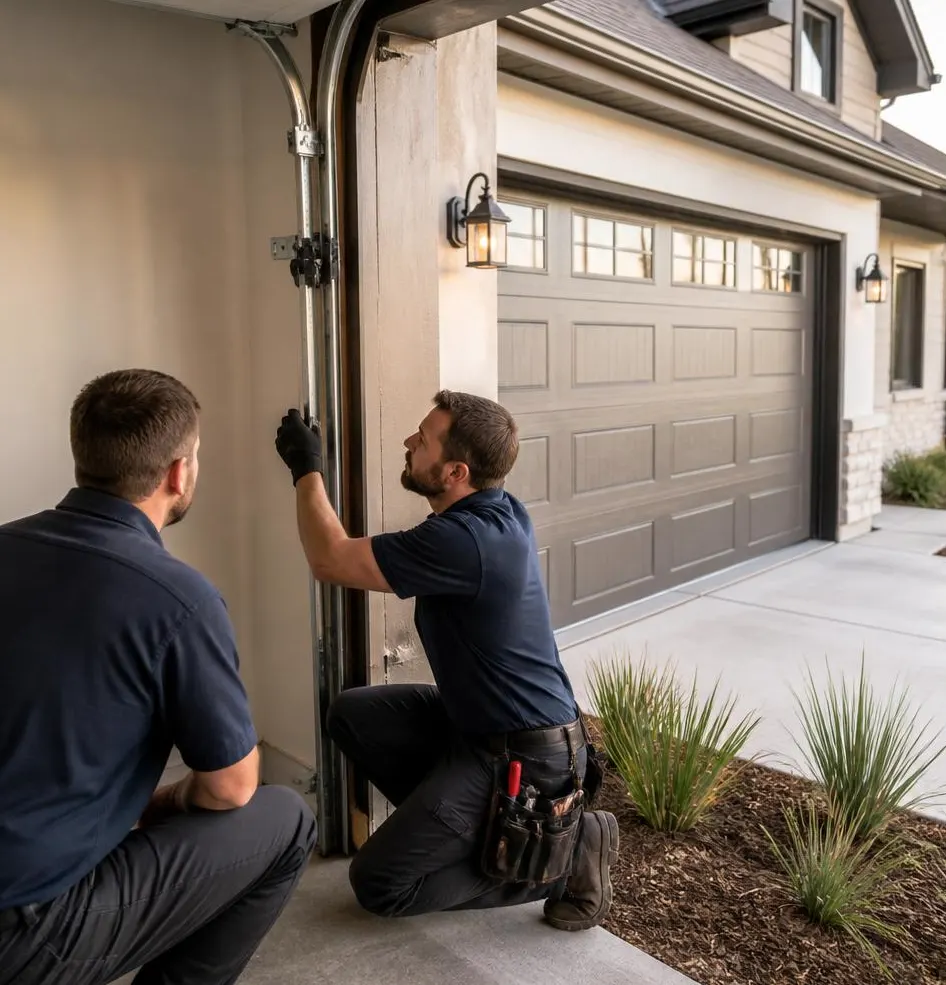
Next comes the track system. Condensation sitting in the track overnight can leave a thin film that increases friction, and steel rollers that have picked up surface rust from months of humidity swings will grind rather than roll smoothly. A technician wipes down the tracks, checks for pitting or rust buildup on the rollers, and applies a silicone-based garage door lubricant to the rollers and hinges — not a household spray like WD-40, which attracts dust and breaks down quickly in humid air. Rollers that are cracked, flat-spotted, or visibly rusted through get replaced rather than lubricated, since lubrication won't fix a roller that's already worn out.
3. Spring Tension
Torsion and extension springs are steel, and steel contracts slightly as temperatures drop. On a door that's already running on old or slightly undersized springs, that small contraction is enough to tip a marginal setup into a door that feels noticeably heavier on a cool morning. This is also where age matters most: springs rated for a certain number of cycles get more brittle and prone to snapping as they approach the end of their life, and a cold snap is often what reveals a spring that was already close to failing. Adjusting or replacing torsion springs is not a homeowner job — the tension involved can cause serious injury — and it's one of the most common calls technicians get once the weather turns.
4. Hinges and Hardware
Hinges connecting the panel sections take the same humidity exposure as the rollers. Rust at the hinge pivot points adds resistance at every section joint, which adds up across a multi-panel door. A technician checks each hinge for free movement, tightens loose mounting screws that have worked free from board swelling, and replaces hinges showing rust-through rather than just oiling them.
5. Opener and Safety Sensors
If the door still won't move after the mechanical parts check out, the opener itself comes next. Condensation on the photo-eye safety sensors near the bottom of the tracks can cause them to misread and stop the door mid-cycle, which looks like a mechanical jam but is really an electronics issue. Wiping the sensor lenses and confirming they're aligned usually resolves it. On older openers, a worn drive gear or chain can also slip under added resistance from everything above, which shows up as the motor running without actually lifting the door.
6. Panel Swelling
Last on the list because it's the least common cause but worth ruling out on wood or composite doors: humidity swings between a hot, wet afternoon and a cool night can cause a panel to swell just enough to bind against the track. This shows up as resistance at one specific point in the door's travel every time, rather than general heaviness throughout. The fix usually involves adjusting track alignment slightly rather than replacing the panel, unless the swelling has caused visible warping.
When to Call Precision Garage Door of Lake Hamilton
If the seal is torn, the springs look rusted or stretched, or the door has been forced through resistance more than once, it's time to call in a technician rather than keep working around it. Precision Garage Door of Lake Hamilton handles both ends of this problem: a Garage Door Tune-Up & Maintenance visit catches rusted rollers, dried-out hinges, and misaligned sensors before they turn into a no-show door on a cold morning, and Garage Door Spring Repair addresses the heavier, higher-risk failures that tend to show up once a spring is already near the end of its life. Call Precision Garage Door of Lake Hamilton, FL today to get your door checked before the next cool front rolls through.