
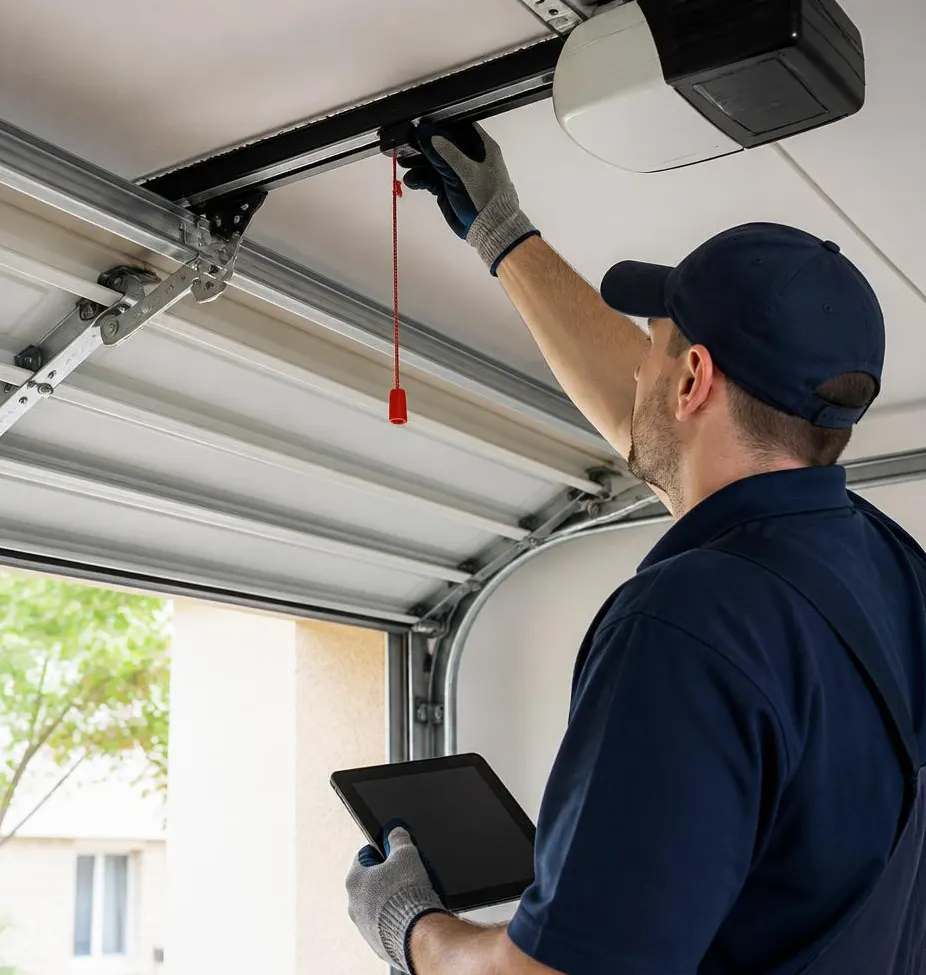
The Mistake: Reaching for the WD-40 First
The first thing most homeowners do when a garage door starts squeaking is grab a can of WD-40 and spray every moving part they can reach. It's tempting because it's cheap, it's already under the sink, and the squeak usually stops for a week or two. The problem is that WD-40 is a solvent, not a lubricant. It strips old grease off rollers and hinges, then evaporates, leaving bare metal exposed to the humidity that sits on everything in this part of Polk County for most of the year. A few months later the squeak comes back louder, and now there's grit and rust mixed into the tracks too. Skip the spray-and-pray approach and work through the door with an actual routine instead.
Tools You'll Need
- A step stool or short ladder
- A socket wrench or adjustable wrench
- A silicone-based garage door lubricant (not WD-40, not grease that gums up with dust)
- A clean rag
- A level (a smartphone level app works fine)
- A flashlight
The 20-Minute Routine
- Walk the door and look for storm wear (2 minutes). After a season of afternoon downpours and tropical storm winds, check panels for dents, check the bottom seal for tears, and look at the track brackets for anything bent or pulled loose from the wall. Salt-tinged air moving inland can speed up surface rust even a few miles from the coast, so look closely at any exposed metal edges.
- Test the auto-reverse safety feature (2 minutes). Place a 2x4 flat on the ground where the door closes. Close the door with the remote. It should reverse immediately on contact. Then try the photo-eye sensors near the bottom of the tracks by waving your hand through the beam while the door is closing — it should stop and reverse. If either test fails, stop using the opener until it's fixed.
- Check the balance (3 minutes). Pull the manual release cord to disconnect the opener, then lift the door halfway by hand. A properly balanced door stays put. If it drifts up or crashes down, the springs are compensating incorrectly — this is a sign of spring wear, and it's not a DIY fix.
- Tighten visible hardware (3 minutes). Go along the tracks and hinges with a wrench and snug up any bolts that have worked loose. Vibration from regular use, plus humidity swelling the wood framing around the opening, loosens brackets faster here than in drier climates.
- Lubricate rollers, hinges, and the track (5 minutes). Use a silicone-based lubricant, not WD-40 or heavy grease. Spray hinges and roller stems, wipe off excess, and run a light bead along the track where the rollers ride. Avoid spraying the springs — that's intentional, and we'll explain why below.
- Wipe down tracks and check the weatherstripping (3 minutes). Clean out any built-up dirt or dead insects from the afternoon rain blowing debris into the tracks. Check the rubber seal at the bottom of the door and along the sides — cracked or flattened seals let humidity and water in, which leads to swelling on wood-paneled doors and rust on steel ones.
- Look, but don't touch, the springs and cables (2 minutes). Shine the flashlight on the torsion springs above the door and the cables running down to the bottom brackets. You're checking for visible gaps in the spring coils, fraying strands on the cable, or rust buildup. These parts are under heavy tension and are not something to adjust or lubricate yourself.
- Replace opener batteries and recheck remote range (2 minutes). A weak remote battery can mimic bigger problems. While you're at it, confirm the keypad still works if you have one — summer humidity can corrode the contacts over time.
Where the Line Is: DIY vs. Technician
Everything above — visual checks, lubrication, tightening hardware, testing the auto-reverse — is safe for a homeowner to do with basic tools. The moment you see a stretched or gapped spring coil, a fraying cable, a door that won't hold its balance, or tracks that are visibly bent, stop. Springs are under extreme tension and cables can snap under load; both are jobs for a trained technician with the right clamps and bars, not a wrench from the garage.
When to Call Precision Garage Door of Lake Hamilton
If your balance test failed, a spring looks worn, or the door has started drifting off its tracks after a stormy few months, it's time to call in a technician rather than keep adjusting things yourself. We handle Garage Door Spring Repair and Off Track Door Repair for homeowners throughout Lake Hamilton, Dundee, Lake Wales, Haines City, and the rest of Polk County, and we also offer a full Garage Door Tune-Up & Maintenance service that covers everything in this checklist plus a hardware inspection most people can't do safely on their own.
If your twenty-minute check turned up anything concerning, give Precision Garage Door of Lake Hamilton a call — we'll get a technician out, diagnose it fast, and get your door back to running quietly and safely before the next round of Florida weather rolls through.